

[G]enocide means any of the following acts committed with intent to destroy, in whole or in part, a national, ethnical, racial or religious group, as such:
(a) Killing members of the group;
(b) Causing serious bodily or mental harm to members of the group;
(c) Deliberately inflicting on the group conditions of life calculated to bring about its physical destruction in whole or in part.— UN Convention on the Prevention and Punishment of the Crime of Genocide
We are seeing today the unfolding of the latest violent episode in the continuing Armenian Genocide. I am not stating that this is a new genocide. Rather, it is the continuation of what started over 100 years ago, and has gone on since.
What started as the slaughter of an estimated 100,000 to 300,000 Armenians in the so-called “Hamidian Massacres” in 1894-97 evolved into a crescendo of atrocities with the arrest and execution of Armenian community leaders, academics, and intellectuals on April 24, 1915. The subsequent eight years saw the annihilation of 1.5 million Armenians, Greeks, and Assyrians. The genocidal massacres lasted until 1923, which are generally regarded as the temporal scope of the Armenian Genocide.
The extent is truly much longer. Not only did the intent to destroy, in whole or in part, the Armenian population from its ancestral homelands start — as mentioned — in the late 19th century, it continued for more than the past 100 years through:
denial that continues to this day;
anti-Armenian subjugation;
cultural genocide from 1915 through the intervening decades, removing Armenian cultural and religious sites in territory controlled by the oppressors;
continued massive violence and elimination.
Indigenous Armenians
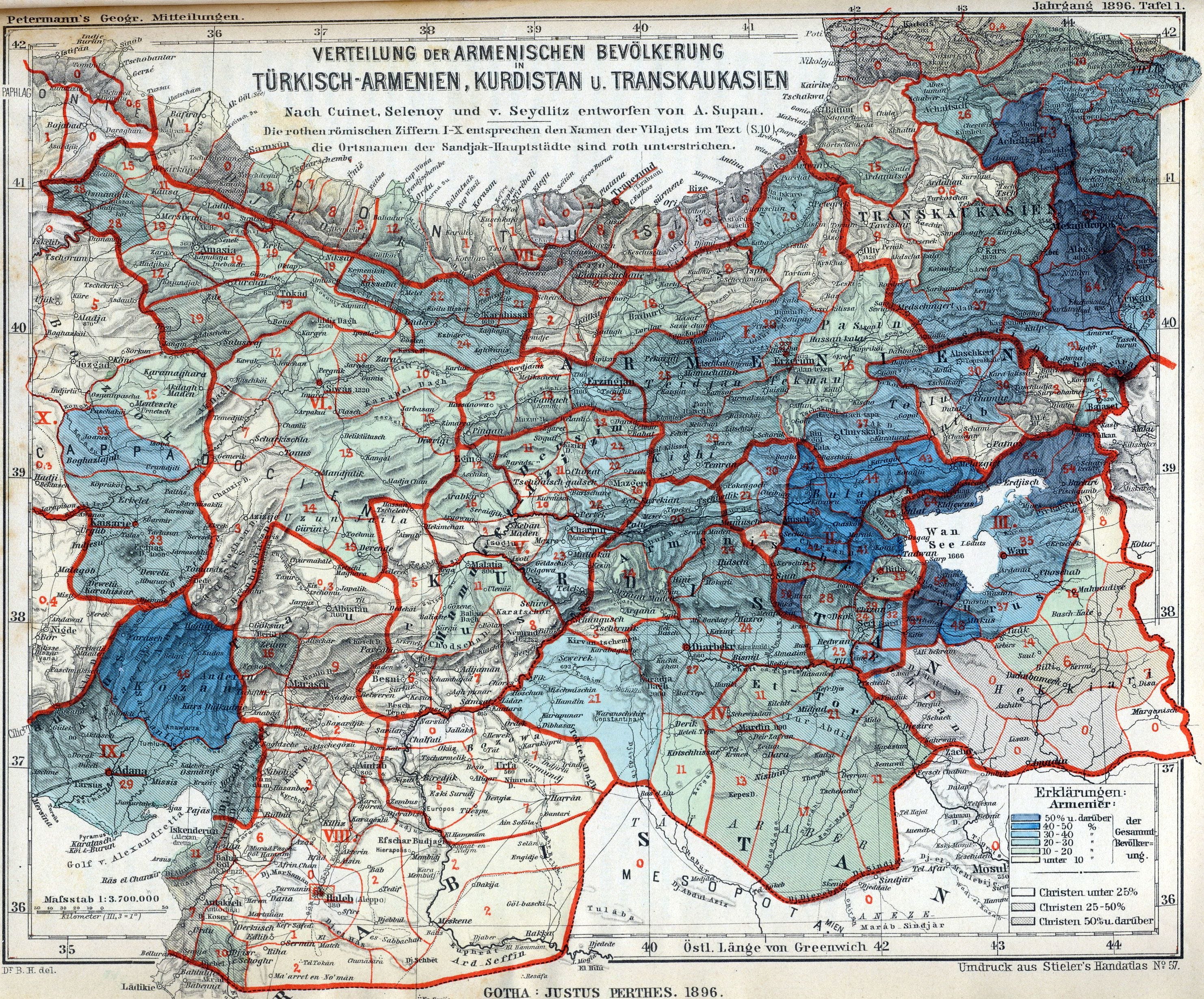
I would first like to highlight the extent of the Armenian population in Asia minor into the Armenian highlands as of 1896, drawn in a map by Petermanns Geographische Mitteilungen, a German geographic magazine of the 19th century.

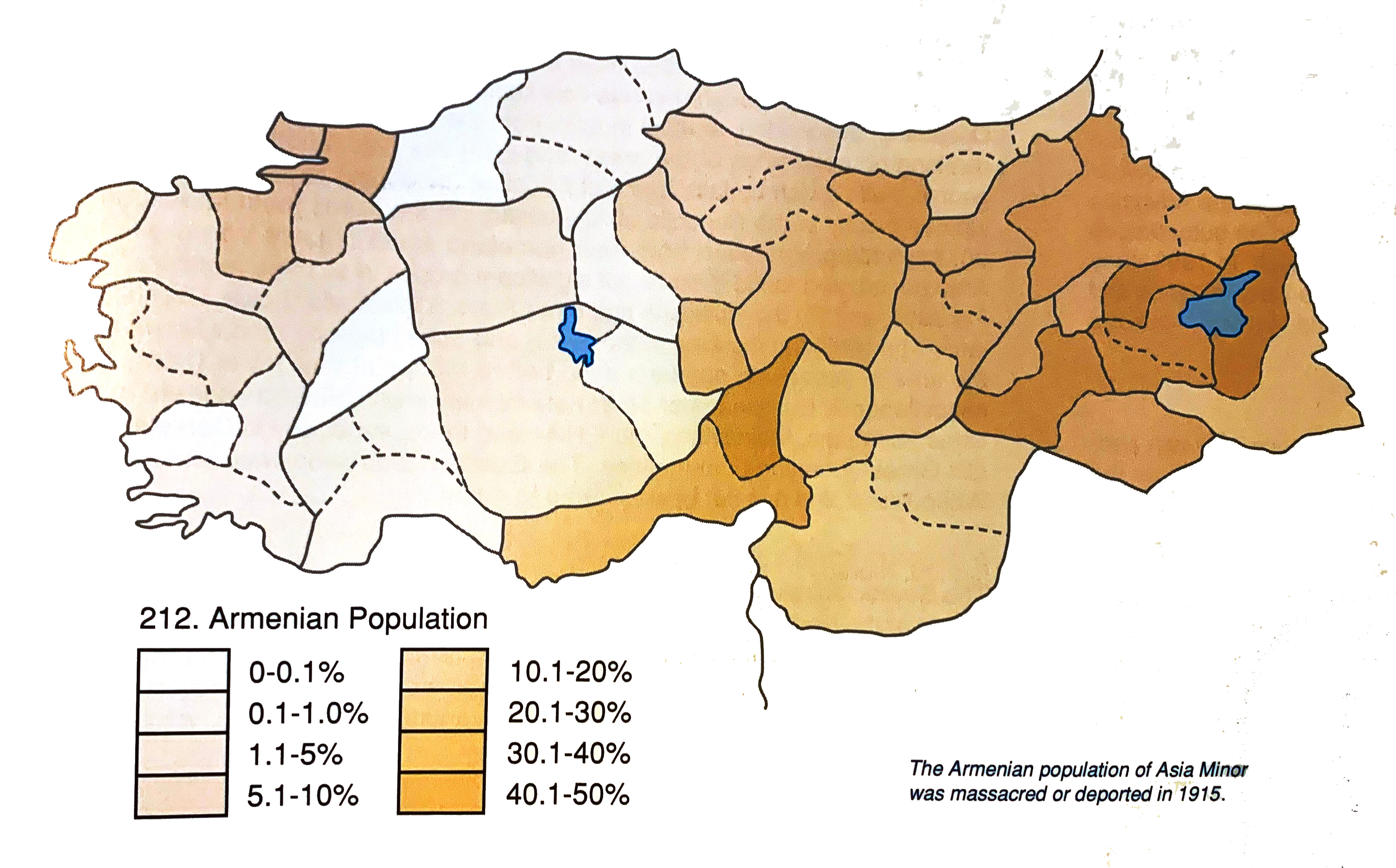
Another more modern-style map is published in Robert H. Hewsen’s Armenia, A Historical Atlas, but is confined to only Asia Minor, which is the area of modern day Turkey. The map above includes the area controlled by the Russian Empire at the time, but not far western Asia Minor, nor all of Artsakh.
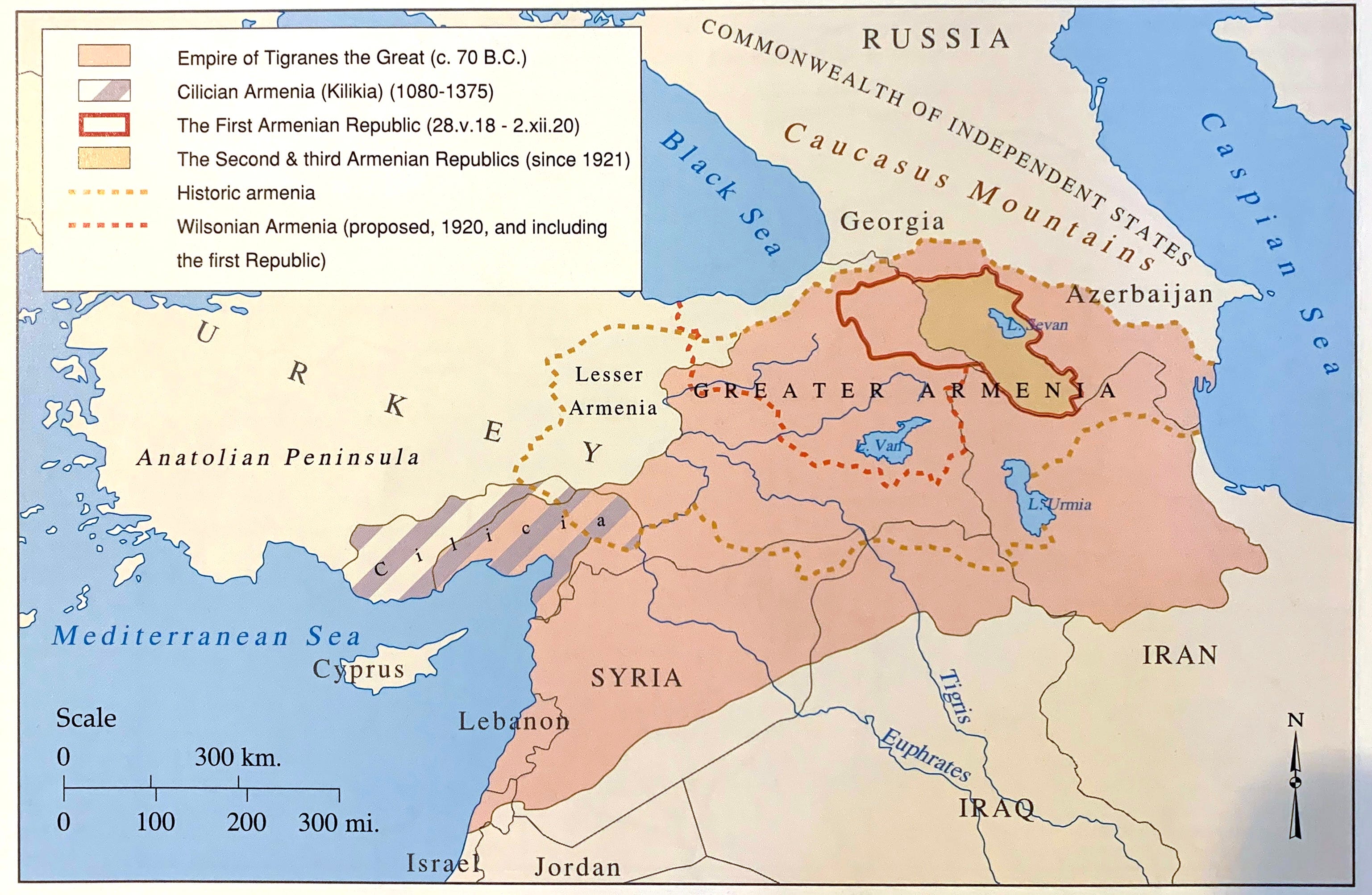
With these maps, I want to impart the extent of the Armenian people across their ancestral lands. The early history is as follows: Armenians are known to arise in the 6th century BC from a blending of Indo-Europeans with the Urartu people of the area, who were present since the 13th century BC. The 6th century BC is when the concept of “Armenian” or “Armen’s” arose. However, the genealogy as measured by DNA connects modern Armenians to the ancient Urartians. In a scholarly paper released in 2017, researchers conducted a comprehensive analysis of the mitochondrial genomes from four ancient skeletons originating from Urartu. This was performed in conjunction with the analysis of genomic data of other ancient populations located in what is now modern-day Armenia and Artsakh, covering a time span of 7,800 years. The study concluded that contemporary Armenians exhibit the smallest genetic divergence from these ancient skeletons.
Armenians and Artsakh Armenians are direct descendants of people from these lands 7,800 years ago. Armenians are indigenous to these lands.
Hamidian Massacres
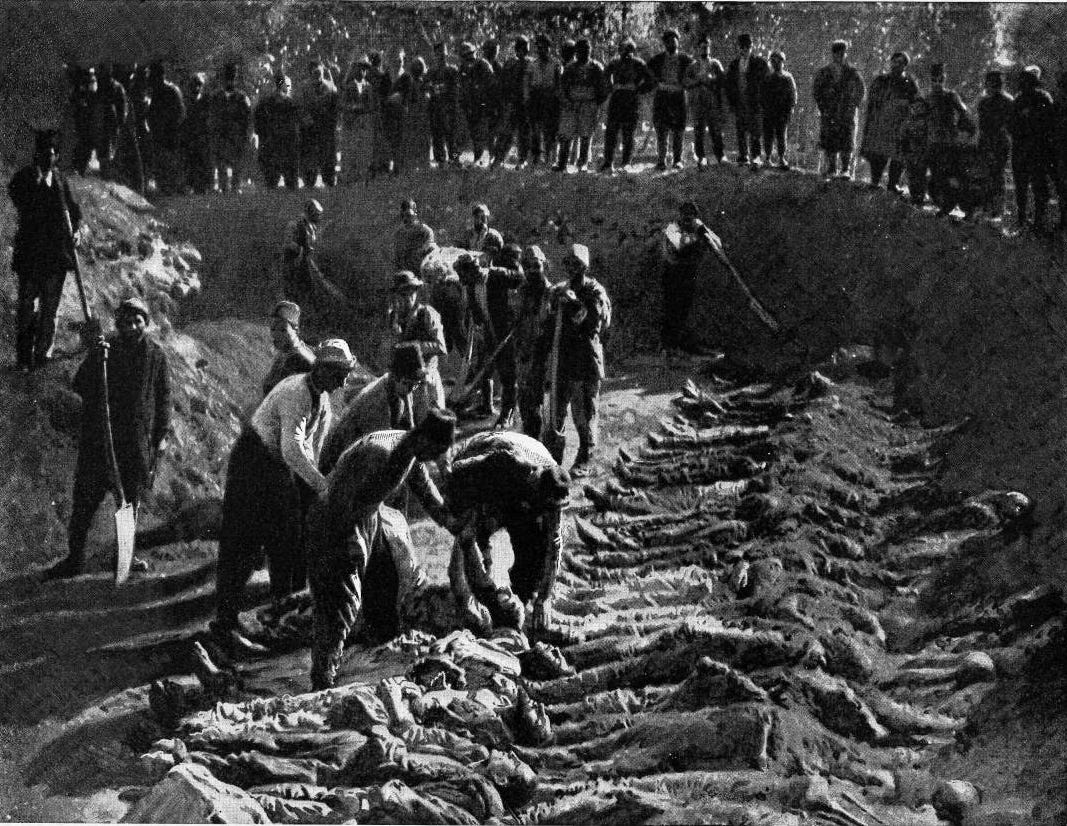

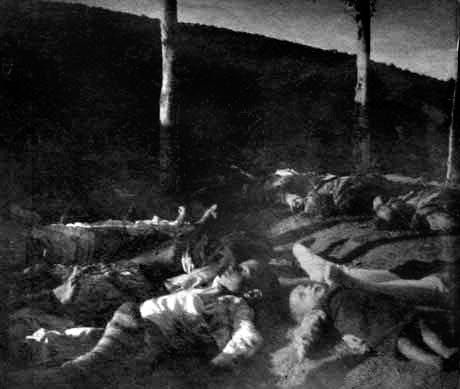
In the late 19th Century, the Ottoman Empire was in decline. The Hamidian massacres are well documented and are seen as arising from the circumstances around Ottoman Empire’s weakening, with Ottoman-controlled areas in Europe having European powers and internal organizations insist upon self-determination for the Balkans. In these circumstances, the Ottoman Armenian population—continually treated as second-class citizens in the Ottoman Empire—asked for better treatment and even sent a delegation to the 1878 Congress of Berlin to lobby the European states to include protections of the rights of the rights of Ottoman Armenians as part of the Russo-Turkic War peace agreement. Those protections were never enforced, but led to further repression. At about that time, the Sultan gave status to irregular forces called the Hamidiye regiments. The Hamidiye irregulars were largely responsible for the Hamidian genocidal massacres, with killing of civilians starting as early as 1892-3. The 1894-1897 massacres were largely in Constantinople, as well as the smaller villages of Bitlis, Diyarbekir, Erzurum, Mamuret-ul-Aziz, Sivas, Trebizond and Van. The massacres subsided in 1896 when news finally arrived to external powers that condemned the Sultan’s massacres.
.jpg)
Events of Genocide in 1915-1923
The Armenian Genocide is widely regarded as confined to the period of 1915-1923, and sometimes even less. I will not elaborate extensively on this interval, as the motivations and execution of the genocide in this duration have already been well-documented and discussed in detail. If you would like to learn more about this time, I recommend my own quick primer on Substack, and references therein, and I copy some of the references here:
There is a good 3 1/2 minute YouTube history crash course here. It uses stick figure animations, so it feels a bit inappropriate for the topic of genocide. But, they probably are a frugal YouTube channel;
The online Armenian Genocide Museum of America is excellent;
The LA Times had significant coverage with the 100th commemoration in 2015;
Wikipedia’s page is very detailed;
PBS produced a good documentary released in 2006, simply called Armenian Genocide. Unfortunately, it seems to only be available publicly by DVD purchase;
Women of 1915 (2016) by Bared Maronian is an excellent documentary as well. It is available on Amazon for rent or purchase;
To delve further into it, I recommend the books The Burning Tigris by Peter Balakian, as well as the first-person account of the events by Henry Morgenthau, the American Ambassador to Ottoman Turkey at the time of the Armenian Genocide: Ambassador Morgenthau’s Story, which is beyond copyright and so is available for free as an e-book.
Turkish War of Independence and Continuing Genocide (1919-1923)
In some accounts, the Armenian Genocide ended in 1916 or 1917. However, massacres resumed after those years on three separate fronts: first, during the Turkish War of Independence in 1919-23, along its eastern front, targeting Armenians in what was Russian-controlled until that time; second, against the Armenian refugees who had returned to Cilicia in southern Turkey in 1921; and third, against the Greek army that had occupied Smyrna in 1922, where the final remaining Armenian community in Anatolia was located. Note that the Turkish national “hero” Mustafa Kemal Atatürk was involved in all of these later genocidal massacres of Armenians, as well as Greeks in Smyrna.
With the collapse of the Russian monarchy, and a mandate from the Treaty of Versailles and US President Wilson, the First Republic of Armenia was founded in 1918 along with the Ottoman Empire capitulating to the Allies that year. However, the Turkish Army kept troops mobilized on the nascent Armenian republic’s border. The Republic of Armenia was besieged by a refugee crisis due to the Armenian Genocide, and was soon to be invaded by Turkish nationalists under the authority of Atatürk.
Much can be written on the Turkish-Armenian war of 1920. Let us just focus on the genocidal aspects. The Turkish Grand National Assembly, whose president was Mustafa Kemal Atatürk, gave orders to the commander of the Eastern Front forces Kâzım Karabekir to “eliminate Armenia physically and politically” (Kevorkian 2020, Nichanian 2015). Note that this is a clear intent to commit genocide of the Armenians from the government led by Atatürk, and why his continued glorification is so problematic. Under Atatürk’s genocidal orders, Karabekir invaded the Armenian republic and massacred 60,000 to 100,000 Armenians in their indigenous, ancestral homeland. Simultaneously, Russian Bolsheviks invaded the Republic of Armenia from the north and declared that portion of the Republic of Armenia to be part of the Soviet Union. Under the Treaty of Moscow (1921)—sometimes also called the “Treaty of Brotherhood”—Mount Ararat, its surrounding plains, as well as practically all the territory conquered by Karabekir was ceded to the Turkish Grand National Assembly by the Bolshevik government, and this was confirmed by the subsequent Treaty of Kars. The genocidal campaign of Atatürk was rewarded.
Genocide Denial in Turkey
The following acts shall be punishable… Complicity in genocide.
— UN Convention on the Prevention and Punishment of the Crime of Genocide
Even during the massive atrocities of 1915-23, the perpetrators denied that it was occurring, claiming it was a resettlement campaign. The Republic of Turkey continues to deny the 1915-1923 period as genocide. The atrocities and intent to destroy are well documented within Turkish records and in records available to the Turkish government. Continuing denial and cover up of the crime of genocide, through destruction of many incriminating records in Turkey, are a continuation of the crime of genocide through complicity. Individuals in Turkey who recognize the genocide have even been subjected to prosecution for “insulting Turkishness.” Complicity in criminal law includes aiding in completion of the crime, and failing to prevent or report it. Genocide denial both aids in completing the crime and fails to prevent future crimes of genocide. The denial of genocide is widely regarded as the last stage of genocide.
The Turkish government, and any government or individual who knowingly denies genocide in the face of overwhelming evidence can and should be considered as complicit in genocide.
According to a legal opinion from a judge of the International Criminal Tribunal for the former Yugoslavia, the ongoing Turkish government’s “denial of past Ottoman and Turkish authorities’ wrongdoings is a new violation of international law” (Lattanzi 2018). By extension, denying genocide in the face of incontrovertible evidence by any government or entity should also be considered a violation of international law.
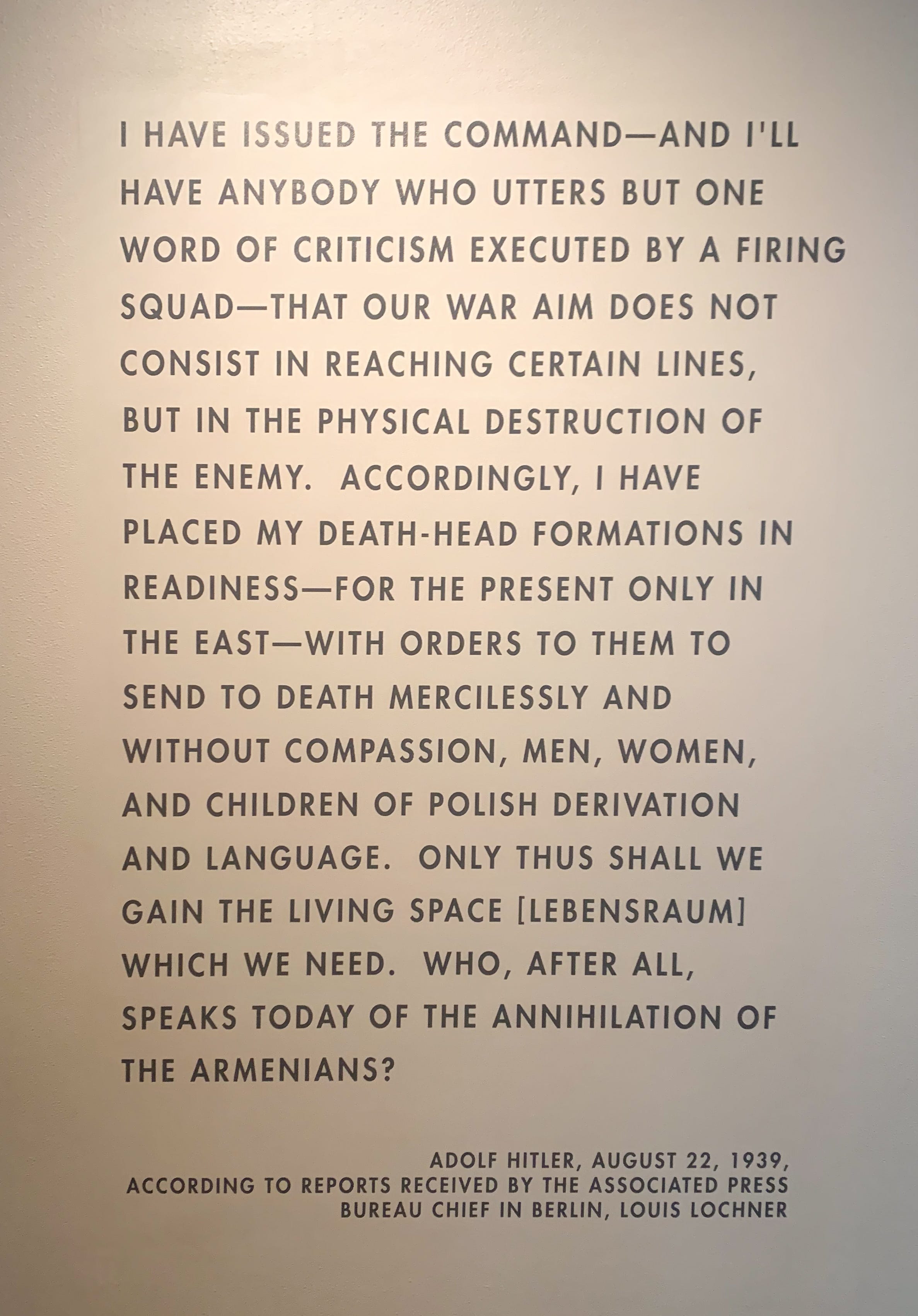
My family and I visited the US Holocaust Memorial Museum in Washington, DC this past summer, and there—posted in in large letters—is a quote by Adolf Hitler motivating the Holocaust, which included, “Who, after all, speaks today of the annihilation of the Armenians?” This brings to question whether the Holocaust may have been prevented if the perpetrators of the first phase of the Armenian Genocide were brought to justice.
Genocide Denial in Azerbaijan
Azerbaijan is a repressive dictatorship that mirrors the policies and geopolitical outlook of Turkey. As the President of Turkey said, Azerbaijan and Turkey are “one nation, two states.” This also goes for their policy of Armenian Genocide denial. The nation of Azerbaijan denies the Armenian Genocide and actively promotes this denial internationally, in partnership with Turkey (Cheterian 2018).
So, we see that the genocide-survivor state of the Republic of Armenia is bordered on two out of three sides by genocide denying states, who, as I will discuss later, are intent on completing the Armenian Genocide.
Cultural Genocide in Turkey
An essential part of genocide and affecting its denial is the removal of any traces of the victims. Raphael Lemkin, who coined the term genocide and led the effort for its recognition as an international crime, wanted to include acts and measures undertaken to eliminate any nations’ or ethnic groups’ culture to be considered a part of the crime of genocide in the UN Convention on Genocide. And, of course, cultural genocide is a necessary part of the campaign of genocide. Elimination of a people and their culture are one and the same.
A survey conducted by UNESCO in 1974 cataloged 913 extant church and monastic sites in Turkey, each in varying states of condition. Buildings at 464 sites had been completely destroyed. Of the remaining sites, 252 were in a state of ruin, while only 197 were sufficiently intact to be considered usable (Bevan 2006). These sites are of course a witness to the former indigenous Armenian presence, and were targets for elimination by the Turkish government ever since 1915.
A 1914 survey conducted by the Armenian Patriarchate of Constantinople, although not exhaustive, identified 2,549 religious sites under its jurisdiction, including over 200 monasteries and 1,600 churches. While many of these structures were destroyed during the genocide, additional sites have been vandalized, demolished, or repurposed as mosques or barns in the years since. The ongoing systematic erasure of Armenian architectural and artistic heritage continues, further obscuring the evidence of millennia of Armenian culture following the mass killings and forced exile of the Armenian population (Bevan 2006).
Cultural Genocide in Azerbaijan
A recent report by Cornell University’s Caucasus Heritage Watch (CHW) has used high-resolution satellite imagery spanning decades to chronicle the total eradication of Armenian cultural heritage in the Nakhitchevan exclave of Azerbaijan, starting in the late 1990s.
In the regions of Artsakh taken over by Azerbaijan since 2020, the government has claimed that ancient Armenian churches and monasteries are “Caucasian Albanian.” Officials from Azerbaijan have consistently asserted that ancient monuments in Artsakh originate from Caucasian Albanian culture, rather than Armenian. They have also labeled certain artworks at these sites that are clearly Armenian, such as khatchkars as “fabrications.” This cultural erasure is essential to the genocidal aims of Azerbaijan to eliminate the Armenians of Artsakh and their indigenous ties to the land.
Artsakh is home to over 4,000 Armenian cultural sites, including 370 churches. Given that most of these sites are now under Azerbaijani control, there is a prevailing view that Azerbaijan will eliminate them or claim they are not Armenian. Ultimately, it's feared that all of Armenian cultural heritage will be targeted and eliminated as it was in Nakhitchevan.
Cultural genocide is an essential component of genocide, and continues to this day in Turkey and Azerbaijan.
Ancient Artsakh to Soviet Subjugation
The history of the Armenians in Artsakh is long. I will focus on the events leading to the current genocide of the Armenians of Artsakh. Artsakh was included as part of Armenia as early as the 2nd century BC (Hewsen 2001), and, as described above, the genetics of both the Armenians of Asia Minor and Artsakh is tied to people in the region 7,800 years ago. It is widely regarded by historians that Armenians have lived in Artsakh for at least 2,000 years.
It is important to distinguish the name Artsakh from Nagorno-Karabakh. Artsakh is the ancestral Armenian name for the region, while Nagorno-Karabakh originated from the imperialist-imposed Russian Nagorno and Turkish Karabakh.
Simultaneous with the Turkish aggression of 1920, Artsakh was also subject to genocide by Azerbaijan, which declared independence for the first time in 1918 and lasted only until 1920. With hundreds massacred in Shushi by Azerbaijani forces starting in 1919, the entire Armenian population was slaughtered in September 1920, with estimates of 20,000 killed by a coalition of Turkish and Azeri forces. This attack led by one of the Young Turk perpetrators of the Armenian Genocide in 1915, Enver Pasha.
By the end of 1920, Bolsheviks came to control what became the Soviet Socialist Republics of Armenia and Azerbaijan. On July 4, 1921, the Bolshevik Caucasus Bureau (Kavbuiro) met and, based on the overwhelmingly Armenian population of Artsakh, placed it within the Armenian Soviet Socialist Republic (SSR). The next day, Joseph Stalin intervened with the committee, and it overturned that decision, placing Artsakh as part of the Azerbaijani SSR. This single decision has been the most critical to the fate of the Armenians of Artsakh, which are being entirely eliminated from their indigenous lands by Azerbaijani forces as I write this.
Many things led to the current state. Ever since the Armenians of Artsakh were forced into Azerbaijan, they worked within the Soviet system to try to gain autonomy or reunite with Armenia, all while under the subjugation of the Azerbaijan SSR, which saw the population of the Soviet Nagorno-Karabakh Autonomous Oblast (NKAO) go from 94% Armenian in 1923 to 75.9% in 1979.
Resumption of Violent Genocide in Artsakh: 1988 to today
In the late 1980’s the Soviet Union’s General Secretary Mikhail Gorbachev brought in a period of “perestroika” that gave the Armenians of Artsakh some hope of a new period of openness that would welcome an effort to reunite their region with Armenia. In February 1988, with a petition by 80,000 residents requesting NKAO be removed from the Azerbaijani SSR, the government of NKAO appealed to the Supreme Soviets of the USSR, Azerbaijan, and Armenia for the region to be united with the Armenian SSR. This led to escalating anti-Armenian violence and massacres in Sumgait and Kirovabad in 1988, and in Baku in 1990. In addition, Soviet forces initiated “Operation Ring” that forcibly displaced Armenians out of the Shahumyan region of Azerbaijan. In response to these events that led to hundreds of fatalities and the forced relocation of more than 400,000 Armenians, the Armenians of Artsakh invoked their right to self-determination. On September 2, 1991, they proclaimed their independence in alignment with both the Soviet Constitution, the Universal Declaration of Human Rights, and the United Nations Declaration on the Rights of Indigenous Peoples. This led to what is referred to as the “First Nagorno-Karabakh War” of 1991-1994. The initially declared Republic of Nagorno-Karabakh eventually changed its name to the Republic of Artsakh. The ceasefire of 1994 lasted 26 years.
In September of 2020, Azerbaijan launched an unprovoked genocidal military assault on the Republic of Artsakh. Artsakh was assisted by the Republic of Armenia, which was also attacked by Azerbaijan. A ceasefire was achieved in November 2020 with Artsakh losing the southern portion of the former Soviet NKAO and ceding the surrounding defensive territories it controlled. Numerous war crimes by Azerbaijan during their genocidal assault were documented. I highly recommend the multi-award-winning documentary film Motherland by Vic Gerami, which goes through the history through 2020 in clear detail, including the Azerbaijani campaign of “caviar diplomacy” preceding the assault.
The 2020 assault ended with a three-way agreement between Armenia, Azerbaijan, and Russia to have Russian peacekeepers protect the remaining Armenians of Artsakh, and to keep the Lachin (Berdzor) corridor open between Artsakh and Armenia, an essential lifeline for food, medicine, and fuel for Artsakh that was otherwise surrounded by hostile forces.
In December 2022, the Russian obligation to keep the Lachin corridor open collapsed, with Azerbaijani state actors blockading the road through the corridor with no intervention by the Russian “peacekeepers.” The International Committee of the Red Cross still connected very limited humanitarian supplies through the corridor until June 2023, when effectively all transport into Artsakh was cut off and the humanitarian situation got exponentially worse, leading to malnutrition and miscarriages, with medical emergencies unable to be treated. By August, Armenians of Artsakh started dying due to malnutrition. At this point, experts in genocide and its prevention had designated the Azerbaijani blockade to be genocide. By August and early September of 2023, prior to the invasion by Azerbaijan into Artsakh, Luis Moreno Ocampo, the founding prosecutor of the International Criminal Court, the Lemkin Institute for the Prevention of Genocide, and Genocide Watch all declared an active genocide of the Armenians of Artsakh. Melanie O’Brien, Chair of the International Association of Genocide Scholars, determined an “ongoing genocide” in Artsakh in an interview on September 22.
By August and early September of 2023, prior to the invasion by Azerbaijan into Artsakh, Luis Moreno Ocampo, the founding prosecutor of the International Criminal Court, the Lemkin Institute for the Prevention of Genocide, and Genocide Watch all declared an active genocide of the Armenians of Artsakh. Melanie O’Brien, Chair of the International Association of Genocide Scholars, determined an “ongoing genocide” in Artsakh in an interview on September 22.
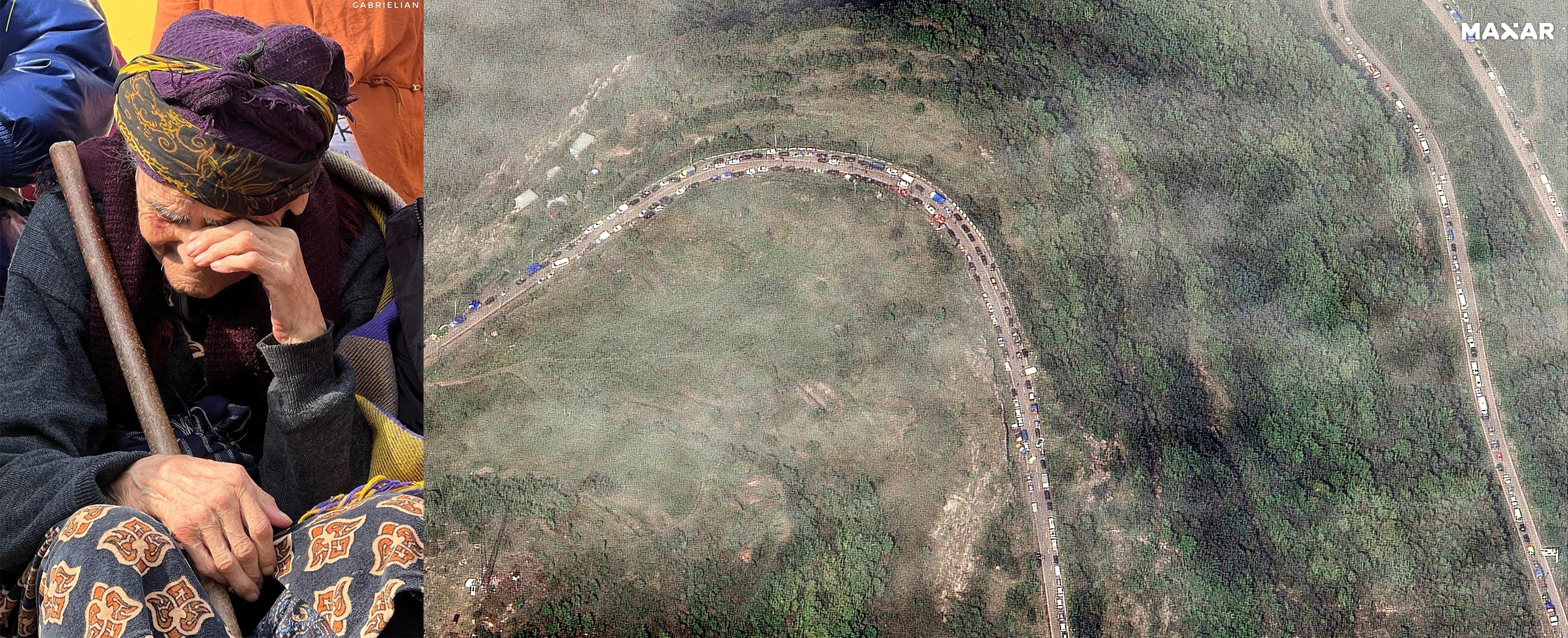
The invasion of Azerbaijani forces into Artsakh on September 19, 2023 witnessed a continuation of war crimes and crimes against humanity, taking what was genocide by blockade to now be military violence against civilians. I have compiled a report of war crimes, anti-Armenian hate, cultural genocide, and the subsequent forced displacement of the Armenians of Artsakh, and will not reiterate them here. Fleeing the violence has led to over 100,000 Armenians to flee Artsakh within a few days. This is was effectively the entire population of Artsakh, with millennia of Armenian presence in the land intentionally destroyed by Azerbaijan.
A line of cars was reported to extend 60 km from the border with the Republic of Armenia to the capital of Artsakh, Stepanakert (September 26, 2023).


The Continued Existential Threat of Genocide to Armenians
So, our story comes to the present time. The Republic of Armenia is the only indigenous Armenian land still populated by Armenians. And, the threats by the genocidal—and genocide-denying—states of Turkey and Azerbaijan continue. The Azerbaijani dictator, Ilham Aliyev, has declared in the past several years that the Republic of Armenia is “Western Azerbaijan.” In a speech delivered on December 24, 2022, filled with racial hatred, Aliyev denied the existence of both the Republic of Armenia and the Armenian people as indigenous to the land. Instead, he refers to the Republic of Armenia as “Western Azerbaijan” and the people as the “Western Azerbaijan Community.” Within this speech, President Aliyev advances a reinterpretation of history that casts Armenia’s existence as illegitimate, claiming that it occupies the “historical lands” of Azerbaijan. Aliyev also has repeatedly threatened to use force to take over Armenian territory to connect with Nakhitchevan and Turkey. Azerbaijan already occupies an estimated 215 square kilometers of Armenia, with attacks on Armenia proper last occurring just one year ago, in September 2022, killing over 200 Armenians, with Azerbaijan’s many gruesome war crimes documented.
And, in Turkey, Aliyev appears to have a willing partner. Just prior to the 2020 attack on Artsakh, President Erdogan of Turkey said of Armenia, “We will continue to fulfill this mission which our grandfathers have carried out for centuries in the Caucasus region.”
Speaking in 2005 to a municipal delegation from Bavaria, Germany, the mayor of Baku, Hajibala Abutalybov, stated “Our goal is the complete elimination of Armenians. You, Nazis, already eliminated the Jews in the 1930s and 1940s, right? You should be able to understand us.”

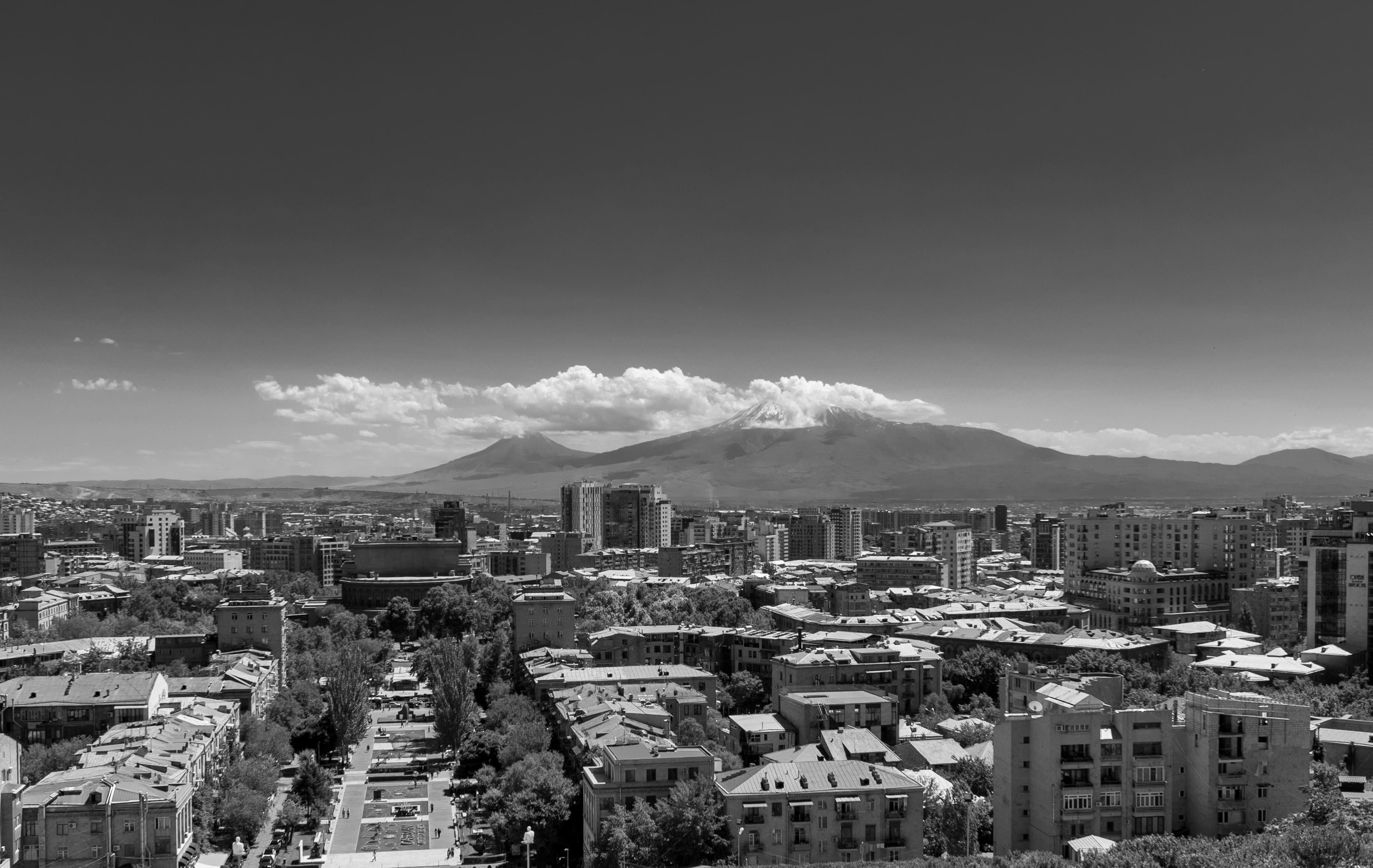
I visited Armenia this past summer, and standing at the top of the Cascade overlook in Yerevan, I could see Mount Ararat and the plains below it very clearly, with the Turkish border ominously only about 20 miles away (see my photo below). With Armenia bordered by two genocide-denialist states that also vow to complete the genocide, its clear that eliminating the Armenians of Artsakh is only the latest chapter in the ongoing Armenian Genocide, unless the world fulfills its obligation to act on Never Again.
How You Can Help
Since publishing this, I have received many queries from people asking how they can help. I suggest:
Center for Truth and Justice - This non-profit is collecting the evidentiary material of war crimes, human rights abuses, and genocide by Azerbaijan, for use in prosecution. It was founded by attorneys and judges in Orange County.
Armenian Relief Society - This non-profit was founded in 1910 and provides direct support to Artsakh families.
PAROS Foundation - This non-profit directly helps Artsakh refugees and those most in need in Armenia. 100% of donations go to projects, as the foundation underwrites all administrative costs.
Armenian National Committee of America - This is an American, grass-roots political advocacy group that strives toward the United States administration to act to halt the ongoing Armenian Genocide, as well as other top Armenian-American priorities.
Armenian Assembly of America - This is a non-profit organization that advocates for federal action supporting Armenian-American priorities.