

In May I wrote that a primary vote for Xavier Becerra was a vote against the planet. I stand by every word. In a crowded Democratic field with two climate-A candidates on the ballot, Becerra’s D grade from Greenpeace, his $39,200 from Chevron, and his reversal on Kern County drilling made him the wrong choice. I voted for Katie Porter. I would do it again.
The primary is over. On November 3, Californians choose between Xavier Becerra and Steve Hilton. And on climate, that is not a choice between good and better. It is a choice between a governor who accepts the physics and a governor who denies it.
I am a physicist. I teach Physics 14 at UC Irvine, our course on energy, environment, and climate, where students work through the actual engineering and economics of the energy system and conclude, every quarter, that a fully renewable carbon-free grid is achievable within our technological and financial constraints. I serve on the City of Irvine Sustainability Commission, which I chaired last year, and I authored our climate crisis action report. I know what the science says and I know what the policy path looks like. So let me be precise about the magnitude of what is on the ballot.
What Steve Hilton Actually Believes
Hilton told the San Francisco Chronicle, in his own words, that he does not believe anthropogenic climate change is making California’s wildfires and floods worse, and that there is no evidence any of California’s climate policies have affected the climate at all. He pledged to do away with those policies in favor of more gas production.
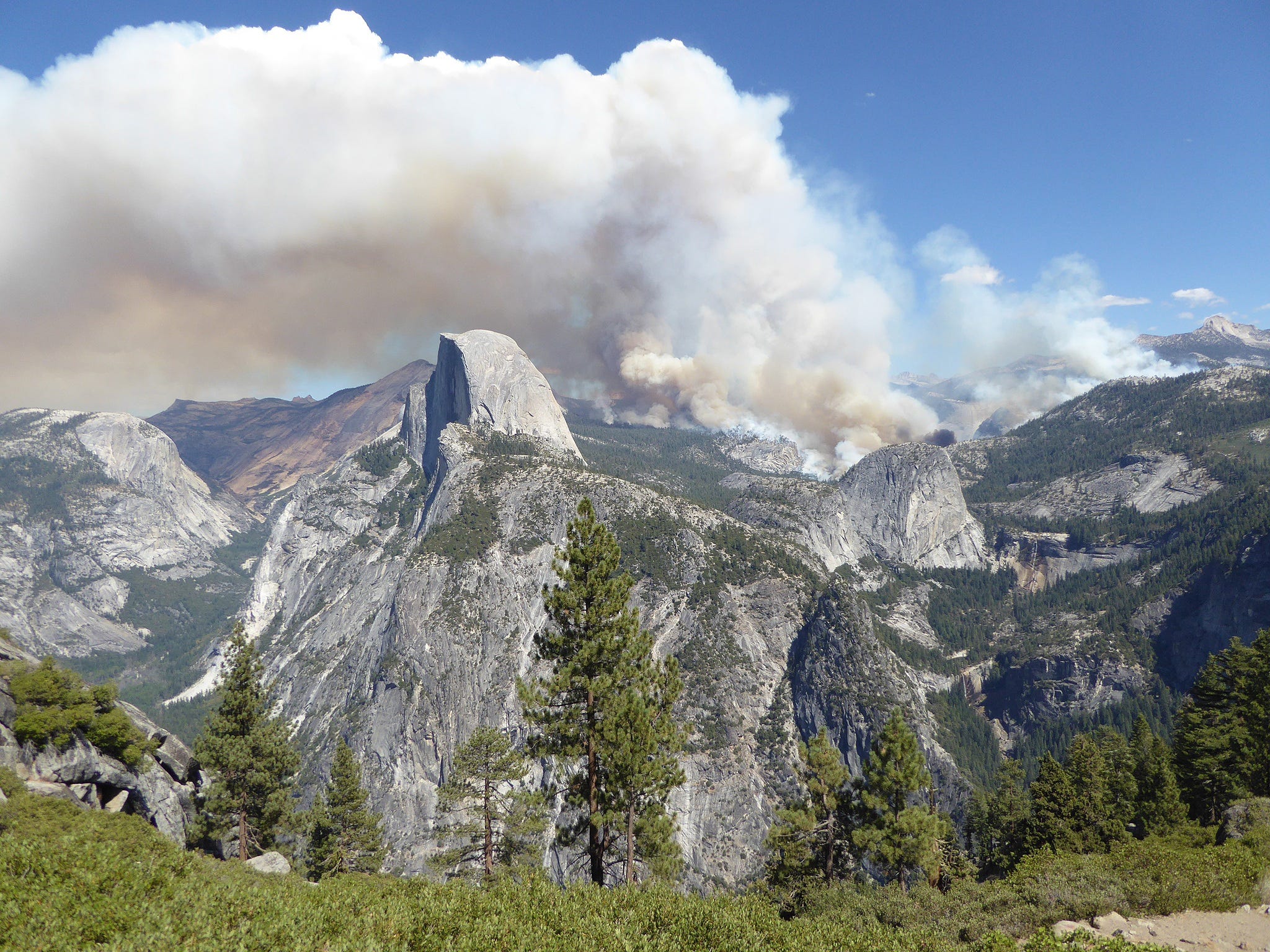
Read that again. The Republican nominee for governor of the fourth largest economy on Earth, a state that just watched Los Angeles burn, denies the attribution science that every major scientific body on the planet accepts. The IPCC’s Sixth Assessment finds with high confidence that human-caused warming is intensifying wildfire conditions, extreme heat, and extreme precipitation. Hilton says there is no evidence for that. He is not disagreeing about policy. He is disagreeing about physics.
His platform follows from the denial. According to CalMatters’ nonpartisan voter guide, Hilton wants to roll back California’s rules mandating a transition to clean energy and reductions in greenhouse gas emissions. He would end the requirements that utilities purchase solar and wind power. He would allow more natural gas production. He would halve the gas tax. His replacement for all of this is a volunteer tree-planting program and forest management, which he has branded “natural carbon sequestration.” Trees are good. Forest management is good. Neither is a substitute for not burning fossil fuels, and Hilton knows it. Reforestation at the scale that would offset even a fraction of California’s emissions does not exist, and the IPCC is explicit that carbon removal can supplement deep emissions cuts but cannot replace them.
Hilton was endorsed by Donald Trump, whose administration has spent two years dismantling federal clean energy incentives, reopening public lands to drilling, and withdrawing from the Paris Agreement. Hilton has said he expects a cooperative relationship with the President. On climate, “cooperative” means California stops being the firewall.
What Xavier Becerra Actually Offers
Becerra is not Katie Porter. I said so, loudly, and I was right to. But here is what he is.
As Attorney General, he sued the first Trump administration more than 100 times, including at least 16 suits against environmental rollbacks, winning the majority of them. That is not a position paper. That is a record of using the full legal power of the State of California to protect clean air, clean water, and climate rules against a hostile federal government. It earned him Sierra Club California’s endorsement in 2018, and it is exactly the capability California needs for the next four years.
He supports the state’s clean energy transition targets. He has said he is open to revising the 2035 gas car ban if it makes energy unaffordable, which I disagree with, but the difference between “open to revising the timeline” and “scrap the entire framework” is the difference between a negotiation and a demolition.
On September 28, California Environmental Voters and the NRDC Action Fund endorsed him. The same EnviroVoters that backed Porter and Steyer in the primary. Their endorsement statement cites three commitments Becerra has made: making corporate polluters pay for the cost of their destruction, funding the clean energy transition and climate resilience through progressive financing, and fighting both the federal government and corporations to protect California’s air, land, and water. That first commitment is the one he opposed as Attorney General. He has moved. Pressure works, and it will keep working on a governor who is reachable by it.
In the September 30 CNN debate, Becerra was the only candidate on stage who said he would stop data centers from draining California’s water and driving up electricity bills, invest in wildfire prevention, and fight Trump’s drilling agenda. Hilton did not attend EnviroVoters’ climate forum. His campaign did not respond to the invitation.
We Are Past 1.5°C. Now Every Tenth of a Degree Is the Fight.
On September 2, the UN Environment Programme published the next finding. Its first-ever Limiting Overshoot report concludes that the world will cross 1.5°C of long-term warming within the next few years. We are at roughly 1.4°C now, on a 20-year average.
That is what collective delay has bought us. Not a warning about the future. A verdict on the past.
The report lays out what comes next. If countries pursue their most ambitious goals, warming peaks around 1.8°C near mid-century and can then be brought back down. Under the policies governments actually have in place today, we reach about 2.6°C by 2100. And UNEP is blunt that even if we eventually return below 1.5°C, some irreversible losses and permanently changed conditions are now certain, including communities that will have to relocate. Every five years of further delay adds at least a tenth of a degree to the peak. The risk of crossing tipping points, from coral reef die-off to the Greenland and West Antarctic ice sheets, grows with every fraction of a degree and with every year we spend above the line.
Greta Thunberg put it in moral terms when the report came out: crossing 1.5°C is a death sentence for countless people, especially the ones least responsible, and the window to prevent the worst is rapidly closing. “Death sentence” is advocacy language, not a modeled number. But the science underneath it holds. Peer-reviewed estimates put heat-related deaths alone in the tens of millions this century across the 1.5°C to 2.6°C range, before counting crop failure, disease, displacement, and conflict, and those deaths fall hardest on the people who emitted the least.
So the question in front of California is no longer whether we stay under 1.5°C. That is gone. The question is how high the peak goes, how long we stay above it, and how fast we come back down. Is it 1.8°C or 2.6°C? Every tenth of a degree between those numbers is measured in lives, coastlines, harvests, and species. The Doomsday Clock sits at 85 seconds to midnight, with climate change named alongside nuclear weapons as a reason. These are not Democratic talking points. They are the measured state of the planet.
Against that reality, California’s next governor will decide whether the fourth largest economy on Earth keeps deploying the cheapest electricity in human history, holds polluters accountable, and defends its climate framework in federal court, or whether it hands the keys to someone who says the fires are not our fault and the solution is more gas. In an overshoot world, a governor who adds four years of delay is not neutral. By UNEP’s own arithmetic, that delay shows up as warming at the peak.
Becerra will be a governor the climate movement has to push. We know how to do that. We did it on polluter accountability already. Hilton would be a governor the climate movement has to fight for four years just to hold ground, while the peak climbs.
In the primary, I asked you to vote for the best climate candidate on the ballot. I am asking you to do exactly the same thing on November 3. His name is Xavier Becerra, and on climate, it is not close.
Vote like we are under an existential threat, because we are.
Sources: UNEP press release on the Limiting Overshoot report; San Francisco Chronicle candidate interview with Steve Hilton; CalMatters 2026 Voter Guide: Governor; EnviroVoters and NRDC Action Fund endorsement of Becerra; EnviroVoters statement on the Becerra v. Hilton debate; EnviroVoters governor’s race page; Sierra Club California 2018 endorsement of Becerra; CalMatters debate coverage; Hilton campaign carbon sequestration plan.