

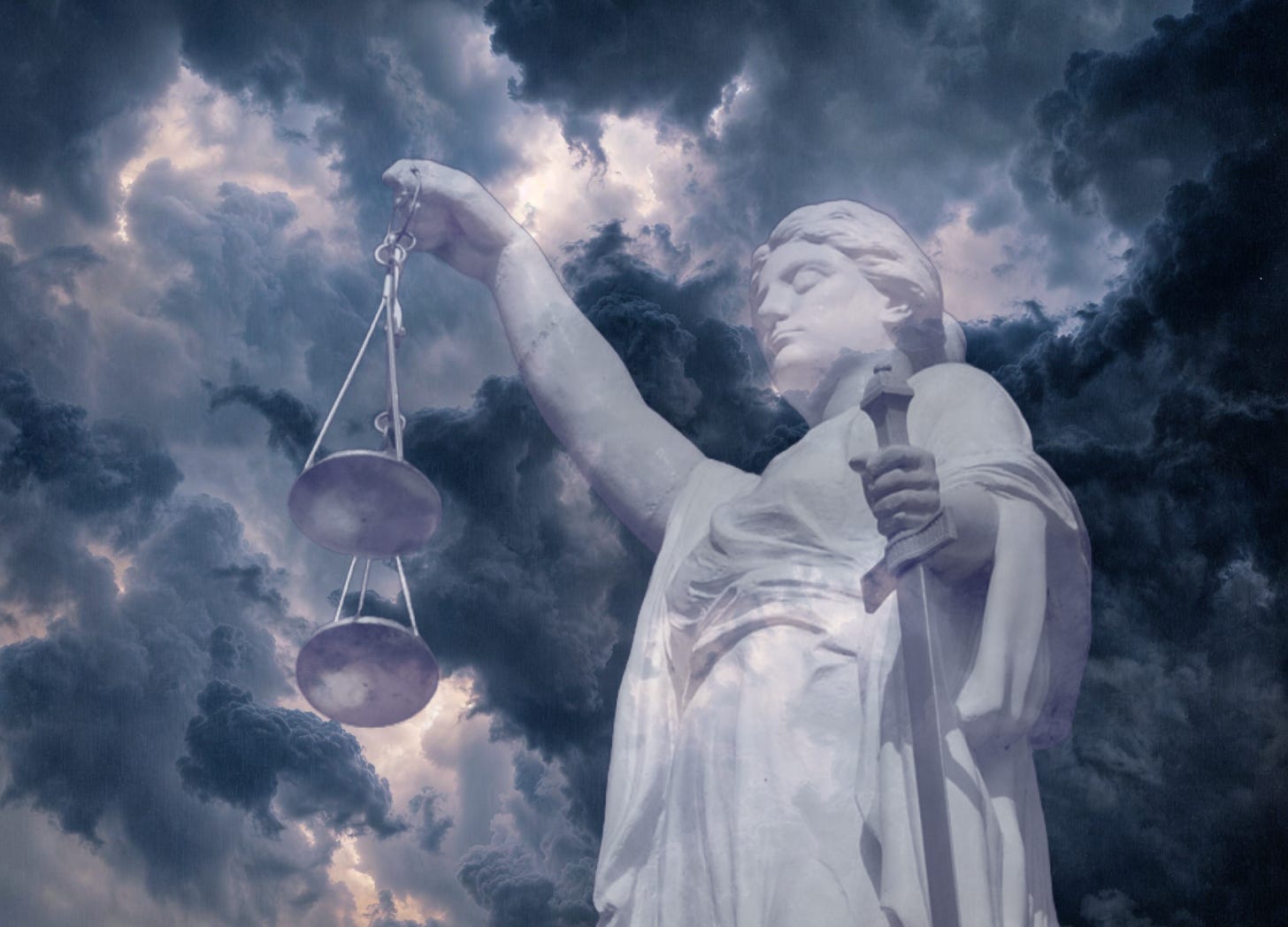
In recent years, we have witnessed a profound disruption of the rule of law, both internationally and domestically. The Trump administration ignores responsibilities outlined in the U.S. Constitution and federal laws enacted by Congress. Discussions of America’s responsibilities under international law are virtually absent from mainstream media and social media. With the U.S. President’s attack on Iran, the dialogue has narrowly focused on short-term strategic benefits and risks, sidelining legal and moral considerations. While there is some congressional objection regarding domestic authority for the strike, the absence of debate on international legal authority is striking. This contrasts with previous discussions, such as those before the 2003 invasion of Iraq, where the U.S.’s international obligations were at least minimally acknowledged. Today, those obligations are essentially disregarded. The U.S. has become a rogue state, and the media environment and its Overton Window fail to address this reality.
At the highest level of American governance, a disturbing pattern of self-serving corruption and disregard for the rule of law has emerged. The President assembled a mob on January 6, 2021, attempting to halt the peaceful transfer of power, and explicitly called for suspending the U.S. Constitution. He is also a convicted felon for covering up payments related to extramarital affairs and has been found liable for sexual assault. Such criminality is rarely discussed, highlighting a broad, systemic erosion of accountability.
Federally, the violations are profound and numerous. Instances of ignoring the faithful execution of laws abound, leaving critical federal programs unfunded or dismantled, including USAID, the National Science Foundation, and the Department of Education. California and other states have been compelled to sue the federal government repeatedly to challenge illegal actions, starting with a directive at the beginning of the President’s term that froze $3 trillion in federal funding—a clear violation of the Administrative Procedure Act. Furthermore, fundamental human rights have been undermined through anonymous abductions and deportations by the Department of Homeland Security, often without due process and even targeting innocent individuals residing legally in the U.S.
Historically, after World War Two, global consensus aimed to protect national sovereignty, prevent genocide, uphold human rights, and protect indigenous peoples. During the Cold War, the U.S. rationalized international law violations as necessary to combat totalitarian communism. However, post-Cold War actions, specifically the invasion of Iraq, flagrantly violated the UN Charter. As a result, America’s moral and legal authority to condemn Russia’s invasion of Ukraine is severely diminished.
This moral and legal vacuum has resulted in a disturbing acceptance of humanity’s worst crimes, including genocide. The Rwandan Genocide in 1994 received significant international attention, leading former President Clinton to describe his greatest regret as failing to intervene. The genocide in Darfur (2003-2006) similarly gained substantial attention, with the International Criminal Court (ICC) indicting several, including Sudanese President Omar al-Bashir, in 2009.
Today, international inaction prevails despite seven ongoing genocides—against the Rohingya in Burma, Masalit in Sudan, Uyghurs in Xinjiang, Ukrainians in territories occupied by Russia, Israeli Jews by Hamas, Palestinians by the State of Israel, and Armenians in Artsakh and Armenia by Azerbaijan—aided by Turkey. In contradiction to having international accountability for these crimes, the U.S. has been attacking the ICC for its attempt at prosecuting some of these crimes, using its international financial and technological dominance to do so.
Ultimately, the erosion of international and federal adherence to law—backed by moral causes—has created a vacuum where no moral compass guides national or individual identity. In this environment, power alone dictates actions, eroding ethical accountability and human dignity. As Americans and global citizens, we must recognize this crisis and call for collective action to restore justice, accountability, and humanity. The alternative—a descent into lawlessness and brutality at home and abroad—is terrifyingly bleak.
Addendum:
On a personal level, American society seems to be increasingly tolerating dishonesty. In academia, I have witnessed a significant rise in academic dishonesty, even in upper-division physics courses—a trend unimaginable nearly two decades ago. Similarly, scientific dishonesty among researchers, even at prestigious institutions, has markedly increased throughout my 24-year career since earning my PhD.